How to Choose a Solar Company in Islamabad: 7 Checks for 2026
Picking the right solar company in Islamabad matters far more than picking the right brand of panel. The capital’s rooftops are filling with systems installed by everyone from seasoned engineering firms to weekend operators who disappear the moment a fault appears. In 2026, with net-metering approvals under tighter scrutiny and electricity bills squeezing every household, the installer you trust determines whether your system saves money for 25 years or becomes a rooftop headache within one.
This guide gives you seven concrete checks to separate a genuine solar company in Islamabad from a fly-by-night reseller, plus a clear look at the installation process from survey to switch-on.
Why Your Installer Choice Outweighs the Hardware
Modern panels and certified inverters are reliable out of the box. What fails early is almost always the workmanship: undersized cables, poor earthing, flimsy mounting, and sloppy net-metering paperwork. Islamabad’s mix of exposed hilltop plots and dense sectors means wind loading, shading, and roof orientation all demand local judgement that no online calculator provides.
A capable installer studies your actual load profile, your roof, and your IESCO connection before quoting. A weak one simply reads a system size off your last bill and sends a template.
7 Checks Before You Sign a Contract
Run every prospective solar company in Islamabad through this checklist before paying a deposit:
- Confirm years in business and ask for three local references you can call.
- Verify AEDB-registered design documentation and a single-line diagram.
- Insist on named panel and inverter models, not vague “A-grade” labels.
- Check the mounting is hot-dip galvanised or aluminium, never painted mild steel.
- Get the net-metering timeline and responsibility in writing.
- Separate the product warranty from the workmanship warranty.
- Ensure spare parts and service engineers are based locally, not out-of-city.
A reputable solar company in Islamabad will answer all seven without hesitation and hand you documentation rather than promises.
What Does the Installation Process Actually Look Like?
Transparency about the process is itself a trust signal. A professional installation in Islamabad runs through predictable stages, and any company skipping steps is cutting corners you will pay for later.
Stage 1: Site Survey and Load Audit
Engineers measure roof area, orientation, tilt, and shading across the day, then map your real consumption. This decides system size far more accurately than guessing from a single bill.
Stage 2: Design and Quotation
You receive a single-line diagram, panel and inverter specifications, a mounting plan, and a transparent price. Compare quotes line by line, not just on the bottom figure.
Stage 3: Installation and Commissioning
A trained crew fits mounting, wiring, earthing, and the inverter, then tests the system under load. Commissioning should include a walkthrough of the monitoring app.
Stage 4: Net Metering
The company files your net-metering application with IESCO, coordinates the bidirectional meter, and hands over approval documents.
2026 System Options and Typical Costs
Before you choose, it helps to see how system tiers map to household needs. The table reflects typical 2026 turnkey Islamabad pricing including net-metering paperwork.
| System Size | Monthly Units | Approx. 2026 Cost (PKR) | Suits |
|---|---|---|---|
| 5 kW | 600–750 | 1,050,000–1,300,000 | Small homes, 1–2 ACs |
| 7.5 kW | 900–1,100 | 1,500,000–1,850,000 | Family homes |
| 10 kW | 1,200–1,500 | 1,950,000–2,450,000 | Large homes, 3–4 ACs |
| 12 kW | 1,450–1,750 | 2,350,000–2,900,000 | Villas, small offices |
When you decide to buy solar panels in Pakistan, insist the quotation names the exact module, its wattage, and its temperature coefficient so you can compare like with like.
Red Flags That Signal a Weak Installer
- A quote with no single-line diagram or named components.
- Pressure to pay the full amount before any site survey.
- No written workmanship warranty.
- Vague answers about net-metering responsibility.
- No verifiable local references.
Why Local Experience Beats a Cheap Bid
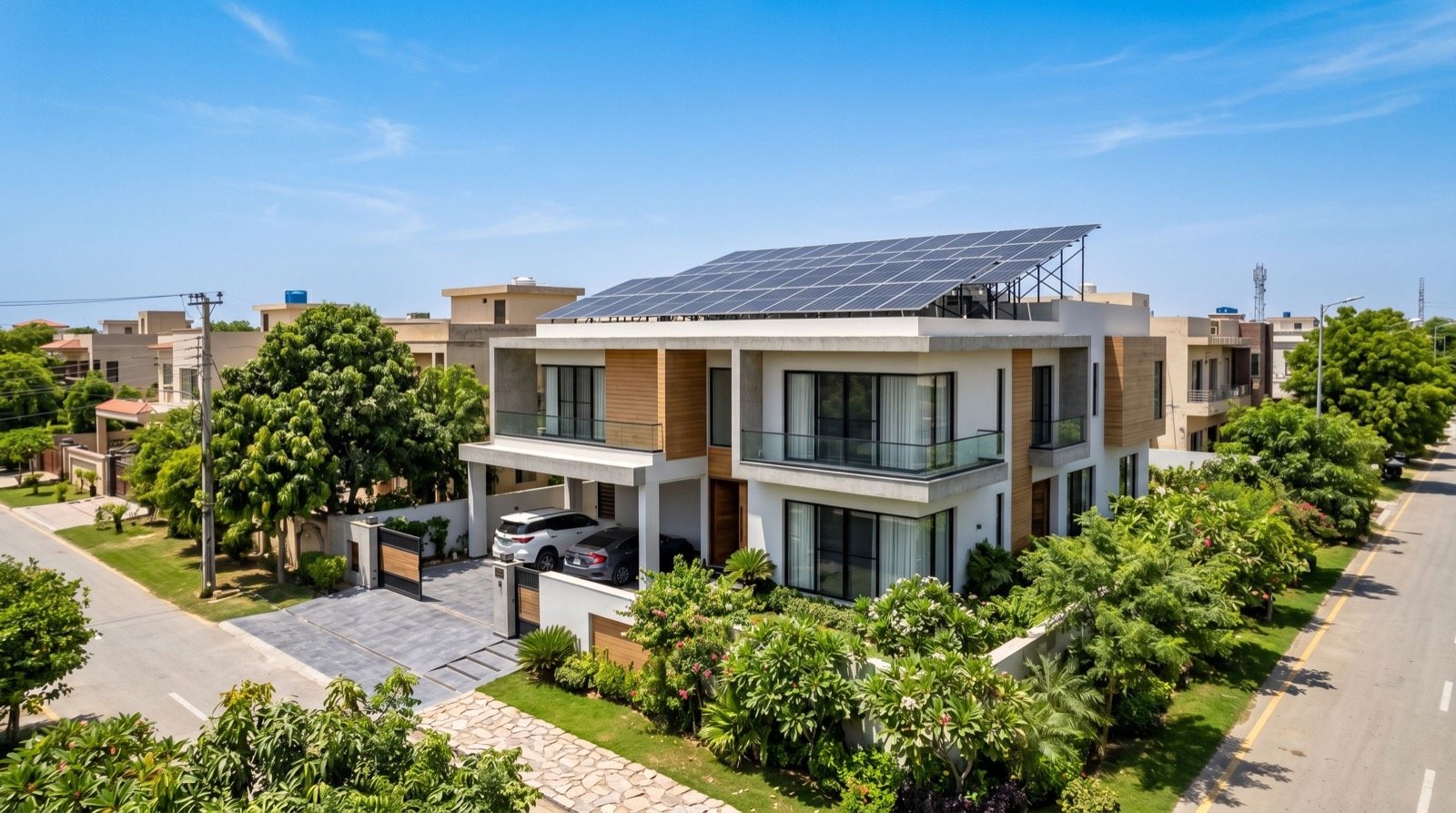
Islamabad’s terrain, from Bani Gala slopes to tightly packed sectors, rewards installers who know the city. An experienced local team anticipates shading from neighbouring plots, handles IESCO paperwork fluently, and returns quickly when service is needed.
For the engineering fundamentals behind good solar design, the US Department of Energy offers a clear homeowner primer, while the International Energy Agency tracks the global cost declines now reaching Pakistani rooftops. Both confirm the same truth: quality installation protects the investment.
Maintenance, Monitoring and Long-Term Value
The relationship with your installer should not end at commissioning. Islamabad’s dusty spring winds and occasional winter haze both affect output, so a company that offers a maintenance plan adds real long-term value. A light panel rinse every few weeks during the dry season recovers several percent of lost generation, and a quick annual inspection catches loose connections before they become faults.
Monitoring is just as important. Every modern system ships with an app that reports daily generation, and a sudden unexplained drop usually signals shading, soiling, or a tripped string. A good installer teaches you to read these figures so you catch problems early rather than discovering them on an inflated bill months later.
Consider the total cost of ownership rather than the purchase price alone. A slightly dearer system from a company with local engineers, stocked spares, and a documented response time will almost always cost less across 25 years than a bargain installation that nobody returns to service. The difference shows up the first summer a fault strikes during peak heat.
Financing and Payback Expectations
Many Islamabad households now spread the cost through bank solar financing or instalment plans offered by established installers. Even with financing charges, the monthly saving on a right-sized system frequently exceeds the instalment, meaning the system can be cash-flow positive almost from day one. With 2026 tariffs, a well-designed on-grid system typically reaches payback in roughly three to four years, after which the generation is effectively free for the remaining two decades of panel life.
Frequently Asked Questions
How long does a solar installation in Islamabad take?
Physical installation usually takes two to three days for a typical home. Net-metering approval through IESCO adds a few weeks, so plan for roughly four to six weeks from contract to full commissioning.
How do I verify a solar company is legitimate?
Ask for AEDB-registered design documentation, named equipment models, and three local references you can actually phone. A genuine company shares these immediately.
Should I always pick the cheapest quote?
No. The cheapest bid usually trims mounting quality, cable sizing, or after-sales support. Those savings vanish the first time a poorly earthed system faults during peak summer.
Do I need batteries for an Islamabad home?
Only if you want backup during outages. For pure bill reduction, an on-grid net-metered system delivers the fastest payback without battery cost.
Final Word
The right solar company in Islamabad earns your trust through documentation, local experience, and a willingness to stand behind its workmanship. Run the seven checks, understand each stage of the installation, and compare quotes on substance rather than price alone. Do that, and your rooftop will quietly pay you back for decades.